
Table of Contents
Introduction
The dawn of written language marks a pivotal transition in human history, transforming oral traditions into permanent records that could be shared across time and space. Emerging around 3400–3100 BCE, writing systems independently developed in several ancient civilizations, enabling the documentation of laws, myths, transactions, and knowledge. This period, spanning from approximately 3000 BCE to 500 BCE, saw the rise of complex societies in Mesopotamia, Egypt, and the Indus Valley, where writing evolved from proto-scripts to sophisticated forms like cuneiform and hieroglyphics.
These innovations not only facilitated administration and commerce but also profoundly influenced religion, governance, and cultural exchange. By the end of this era, early alphabets began to emerge, laying the groundwork for more accessible literacy. This page explores the key developments in these ancient writing systems and their societal impacts, drawing on archaeological evidence and historical analyses.
Sumerian Cuneiform: The World's Oldest Writing System
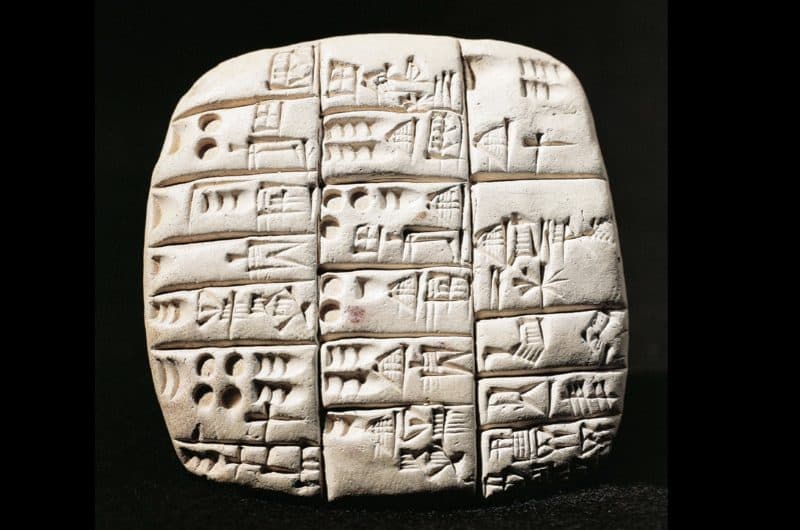
Cuneiform, originating in ancient Sumer (southern Mesopotamia, modern-day Iraq) around 3200 BCE, is widely regarded as the earliest fully developed writing system. It evolved from a proto-writing system of clay tokens used for accounting purposes as early as 8000 BCE, which represented goods like livestock or grain. By 3500–3000 BCE, these tokens were impressed onto clay tablets to create two-dimensional pictographs, initially serving economic functions such as tracking agricultural transactions and contracts.
The name "cuneiform" derives from the Latin cuneus (wedge), reflecting the wedge-shaped marks made by pressing a reed stylus into soft clay. Over time, the script transitioned from pictographic to more abstract signs, incorporating phonetic elements around 3000–1500 BCE to represent sounds and syllables, allowing it to transcribe spoken Sumerian—a language isolate not related to Semitic tongues. By 2600 BCE, coherent texts appeared, including administrative records, legal codes like the Urukagina reforms, and epic literature such as the Epic of Gilgamesh.
Cuneiform's adaptability led to its adoption by neighboring cultures, including the Akkadians (who conquered Sumer around 2334 BCE), Babylonians, Assyrians, and Hittites. It encompassed over 700 symbols, which varied by region and era, and was used until around 100 CE. Archaeological finds, such as the over 500,000 tablets from sites like Uruk and Nineveh, reveal its role in everything from royal inscriptions to mathematical calculations.
Egyptian Hieroglyphics: Symbols of Power and Eternity
Parallel to cuneiform, Egyptian hieroglyphics emerged around 3250–3200 BCE in the Nile Valley, likely independently, though some scholars suggest possible Mesopotamian influence through trade. The earliest examples appear on royal tombs and artifacts from the late Predynastic period, such as the Narmer Palette (c. 3100 BCE), which combines pictorial and symbolic elements.
Hieroglyphics, meaning "sacred carvings" in Greek, consisted of about 1,000 logographic, syllabic, and alphabetic signs, often beautifully rendered in color on papyrus, stone, or wood. Unlike cuneiform's wedge shapes, hieroglyphs were pictorial, depicting animals, objects, and human figures, with phonetic complements to clarify pronunciation. The system included determinatives—non-phonetic signs indicating word categories—and was written in rows or columns, readable from right to left or vice versa based on figure orientation.
By the Old Kingdom (c. 2686–2181 BCE), hieroglyphics were used for monumental inscriptions like the Pyramid Texts, religious spells ensuring pharaohs' afterlife. Cursive forms, such as hieratic (for administrative documents) and later demotic (c. 650 BCE), developed for everyday use on papyrus, facilitating trade records and literature like the Book of the Dead. Hieroglyphics persisted until the 4th century CE, deciphered in the 19th century via the Rosetta Stone (196 BCE), which featured parallel texts in hieroglyphic, demotic, and Greek.
Indus Valley Script: An Enigmatic Legacy
In the Indus Valley (modern-day Pakistan and northwest India), a script emerged around 3000–2600 BCE during the Mature Harappan phase of the Indus Valley Civilization (c. 2600–1900 BCE). Unlike cuneiform or hieroglyphics, this script remains undeciphered, consisting of about 400–600 signs found on seals, pottery, and tablets from sites like Mohenjo-Daro and Harappa.
The script appears logo-syllabic, with short inscriptions (averaging 5 signs) often accompanied by animal motifs, suggesting use in trade, administration, or ritual. Evidence of contact with Mesopotamia, including Sumerian-style seals dated to 2500 BCE, hints at cultural exchange, but the script's independence is debated. Its decline around 1900 BCE coincided with the civilization's collapse, possibly due to environmental changes, leaving no direct descendants.
The Emergence of Early Alphabets
By the late 2nd millennium BCE, alphabetic systems began to simplify writing. Proto-Sinaitic script (c. 1800 BCE), used by Semitic workers in Egypt's Sinai Peninsula, adapted hieroglyphic signs into consonants, marking a shift from syllabic to alphabetic principles. This evolved into the Proto-Canaanite alphabet (c. 1500 BCE) and, by 1100–1000 BCE, the Phoenician alphabet—a 22-consonant system that influenced Greek, Latin, and many modern scripts.
Phoenician traders spread this efficient system across the Mediterranean, aiding commerce and reducing the symbol count from hundreds to dozens. In Mesopotamia, cuneiform also transitioned toward alphabetic forms by the 7th century BCE, though it retained complexity.
Impact on Religion, Trade, and Governance
Writing revolutionized society. In religion, it preserved myths and rituals: Sumerian hymns to gods like Inanna and Egyptian funerary texts ensured spiritual continuity. Trade benefited from standardized records; Mesopotamian merchants used cuneiform contracts, while Indus seals likely certified goods in long-distance exchanges with Sumer.
Governance was centralized through written laws, such as Hammurabi's Code (c. 1750 BCE) in Babylon, inscribed in cuneiform on stelae for public display. In Egypt, hieroglyphic decrees from pharaohs like Ramses II (c. 1279–1213 BCE) asserted authority and documented conquests. Writing also fostered diplomacy, as seen in the Amarna Letters (c. 1350 BCE)—cuneiform tablets exchanging messages between Egyptian rulers and Near Eastern kings. Overall, these systems enabled complex bureaucracies, with scribes forming an elite class trained in temple schools. They preserved knowledge, from astronomical observations to medical texts, accelerating cultural and technological progress.
Conclusion
The ancient languages and writing systems from 3000 BCE to 500 BCE laid the foundations of recorded history, bridging prehistoric oral cultures to classical civilizations. From Sumerian cuneiform's economic origins to Egyptian hieroglyphics' monumental grandeur and the enigmatic Indus script, these innovations empowered societies to document, govern, and innovate. Their impacts on religion, trade, and governance were profound, fostering interconnected empires. As alphabets emerged, writing became more democratized, setting the stage for the classical era's linguistic evolutions in Greece, Rome, and beyond.
Discover Living Ancient Languages
From ancient roots to modern use—explore Latin and other languages that connect us to the classical world.