
Table of Contents
Introduction
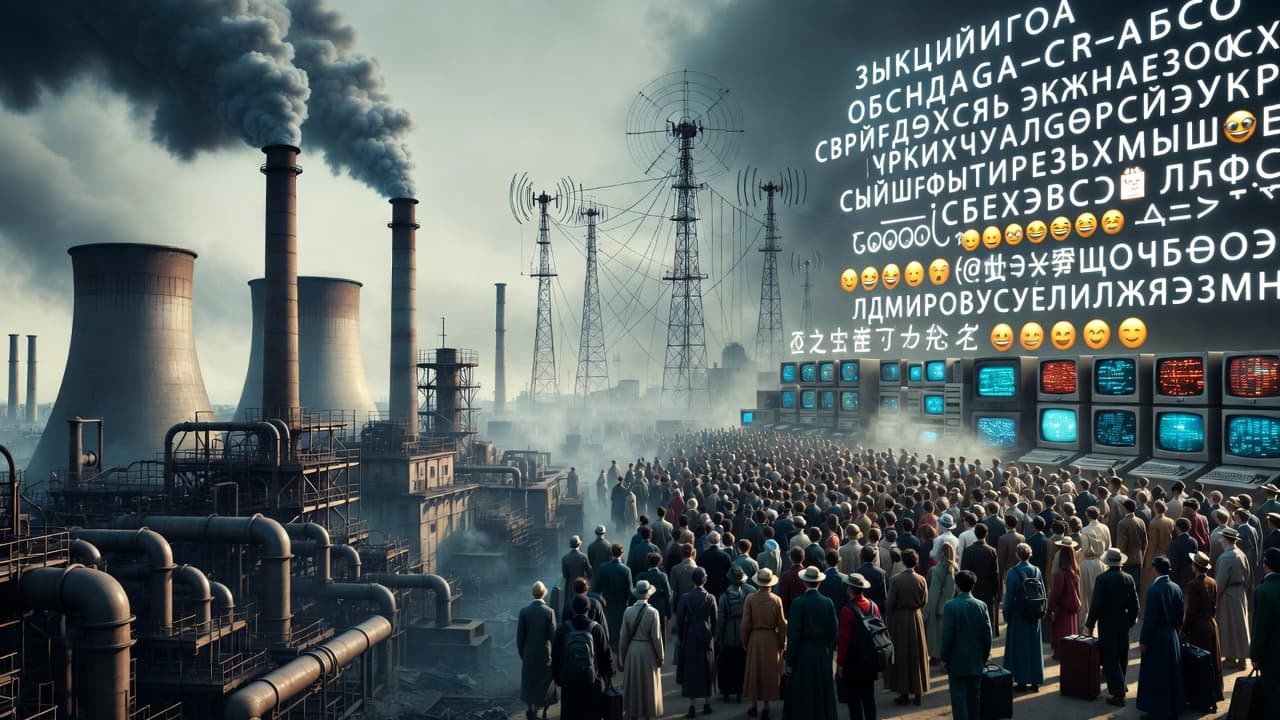
The period from the 19th century to the present—often termed the modern era—has witnessed unprecedented acceleration in language change due to industrialization, mass migration, colonialism's aftermath, two world wars, and the rise of global communication technologies. Industrialization drove urbanization and mass education, promoting linguistic standardization and the spread of national languages. Globalization and migration created new contact zones, leading to the emergence of pidgins, creoles, and hybrid forms while accelerating language extinction.
English solidified its position as the dominant global lingua franca, while technology—from radio and television to the internet and social media—transformed how languages evolve, introducing new slang, abbreviations, and visual elements like emojis. This era also saw concerted efforts to document, revive, and protect endangered languages amid growing awareness of linguistic diversity.
Today, approximately 7,000 languages exist, but many face extinction, with UNESCO estimating that one language disappears every two weeks. This page explores these transformative forces, highlighting both the homogenization and diversification of human language in the industrial and digital age.
Industrialization and Linguistic Standardization
The Industrial Revolution (late 18th to early 20th century) reshaped societies and languages. Urbanization drew rural populations to factories, mixing dialects and accelerating the adoption of standardized national languages. Compulsory education systems, introduced in countries like Britain (1870), France (1882), and the United States (late 19th century), promoted literacy in standard forms, often suppressing regional dialects.
In Europe, national languages solidified: German unified under the Second Reich (1871), Italian standardized post-unification (1861), and Spanish spread across Latin America through state education. Printing and mass media further entrenched norms—newspapers and novels in standard varieties reached millions. In the United States, Noah Webster's dictionary (1828) and spelling reforms helped create American English as a distinct variant, while British English influenced the Commonwealth.
Industrial terminology exploded, with new words for machinery, science, and labor (e.g., "steam engine," "assembly line," "electromagnetism"). Technical vocabularies borrowed heavily from Greek and Latin roots, creating international scientific jargon.
Mass Migration, Language Contact, and New Varieties
Mass migration—driven by industrialization, famine, war, and opportunity—created unprecedented language contact. Between 1820 and 1920, over 30 million Europeans migrated to the Americas, while internal migrations in Europe and colonial movements reshaped linguistic landscapes.
In the United States, waves of Italian, German, Irish, and Eastern European immigrants led to language shift toward English, with generational loss of heritage languages. In South America, Italian and German communities influenced regional Spanish and Portuguese. Colonial migration produced creoles: Haitian Creole (French-based), Jamaican Patois (English-based), and Tok Pisin in Papua New Guinea (English-based).
Pidgins emerged in trade and labor contexts, such as West African Pidgin English or Chinese Pidgin English in 19th-century ports. These simplified contact languages often evolved into full creoles when children acquired them as native tongues. Post-colonial migration continued this trend: South Asian and Caribbean communities in Britain created Multicultural London English, blending elements from multiple languages.
The Rise of English as a Global Lingua Franca
English's ascent as the dominant global language accelerated in the 19th–20th centuries. The British Empire's peak (covering a quarter of the world's land by 1920) spread English to colonies in Africa, Asia, and the Pacific. The United States' economic and cultural dominance after World War II—through Hollywood, popular music, technology, and institutions like the United Nations—cemented English as the language of international business, science, aviation, and diplomacy.
Today, English is the most widely used second language, with non-native speakers outnumbering natives (approximately 1.5 billion total users). Varieties like Indian English, Nigerian English, and Singlish reflect local adaptations. English dominates the internet (over 50% of content), reinforcing its role in globalization.
The dominance of English has sparked debates about linguistic imperialism and its impact on local languages and cultures. However, English also serves as a bridge for international communication and access to global knowledge, creating a complex linguistic landscape where English coexists with and sometimes threatens local languages.
Language Extinction, Endangerment, and Revival Efforts
Industrialization and globalization have accelerated language loss. Colonization suppressed indigenous languages in the Americas, Australia, and Africa. In the 20th century, assimilation policies (e.g., residential schools in Canada and the U.S., Stolen Generations in Australia) targeted native tongues.
UNESCO's Atlas of the World's Languages in Danger classifies over 40% of languages as endangered. Factors include urbanization, media dominance of major languages, and intergenerational transmission failure. However, revival movements have succeeded: Modern Hebrew was revived in Israel (late 19th–20th centuries) from liturgical use to a national language. Māori in New Zealand and Hawaiian in the U.S. have seen revitalization through education and media.
International efforts, such as the UN's International Decade of Indigenous Languages (2022–2032), promote documentation and preservation. Digital tools, community programs, and immersion schools offer hope for endangered languages, demonstrating that language loss is not inevitable.
The Impact of Technology: Radio, Television, Internet, and Beyond
Technology has profoundly shaped modern language. Radio (1920s) and television (1950s) standardized pronunciation and introduced new vocabulary. Broadcasting promoted national accents (e.g., BBC English) while spreading American English globally. These technologies created shared linguistic experiences and accelerated the spread of new terms and phrases.
The internet (1990s onward) and social media revolutionized communication. Digital platforms enable rapid slang creation (e.g., "LOL," "meme," "ghosting") and global diffusion. Emojis, GIFs, and abbreviations create a visual, multimodal language transcending spoken forms. Code-switching and hybrid forms thrive online, with users seamlessly blending languages and registers in ways impossible in traditional communication.
Social media also preserves minority languages through community pages and digital archives. Machine translation (e.g., Google Translate) and AI tools reduce barriers but raise concerns about linguistic homogenization. The digital age has created new forms of written language closer to speech, with their own conventions and norms that continue to evolve rapidly.
Current Linguistic Diversity and Global Trends
Today, linguistic diversity remains vast, with Mandarin Chinese as the most spoken first language (over 900 million speakers), followed by Spanish, English, Hindi, and Arabic. Multilingualism is common, especially in Africa and South Asia, where individuals routinely navigate multiple languages in daily life.
Globalization fosters "superdiversity" in cities, where multiple languages coexist. English, however, dominates as a bridge language, influencing others through loanwords (e.g., "internet," "smartphone," "selfie"). This linguistic borrowing reflects technological and cultural changes, with English terms often adopted wholesale into other languages.
Challenges include balancing global communication with cultural preservation. Efforts like multilingual education and digital tools aim to sustain diversity. The tension between global connectivity and local identity continues to shape language policies and individual linguistic choices worldwide.
Conclusion
The industrial and global era has transformed language through standardization, migration, technological innovation, and globalization. English's rise as a lingua franca reflects power dynamics, while language extinction highlights the fragility of diversity. Yet revival efforts and digital tools offer hope for preservation.
As we move further into the digital age, language continues to evolve—adapting to new technologies, reflecting social change, and bridging global communities while striving to maintain cultural heritage. This era's linguistic developments set the stage for future speculations about AI, neural communication, and potential global convergence. The challenge ahead is to harness technology's power to preserve linguistic diversity while facilitating global communication.
Master English and Other Global Languages
English has become the world's leading lingua franca, connecting people across continents. Start learning through real news articles and discover how global languages are shaping our connected world.